Learning from Liverpool’s specialist 14–19 model

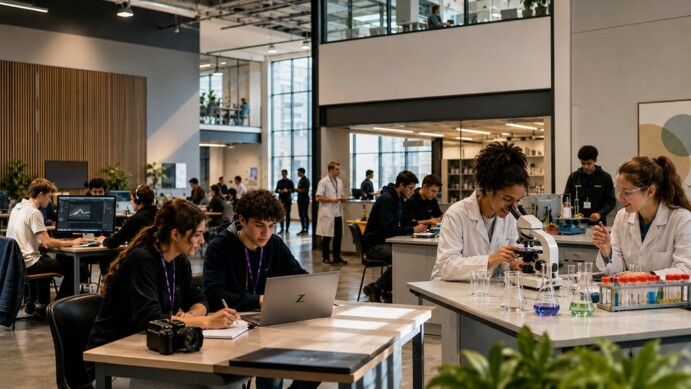
The Studio Liverpool and Liverpool Life Sciences UTC offer an interesting example of how schools can help young people experience future careers through specialist learning environments, sector-focused facilities and employer-connected pathways.
Based in Liverpool’s Baltic Triangle, the two schools are co-located and provide specialist post-14 pathways across creative, digital, science, healthcare and engineering-related fields. Young people learn through a combination of academic study, technical qualifications, sector-specific spaces, employer-facing projects and professional-style learning environments.
For Ormiston Trust, the model is particularly relevant to our Futures work, which explores how schools can help young people connect curriculum learning with future pathways, local opportunity and real-world industries.
Career immersion by design
What makes the Liverpool model distinctive is the way curriculum, place, facilities and future career identity come together.
Young people are not simply given careers information or occasional opportunities to meet employers. Instead, they are educated in environments designed to make future sectors feel visible, tangible and credible.
For The Studio Liverpool, this includes creative, digital and technology-focused pathways. For Liverpool Life Sciences UTC, the focus includes science, healthcare, life sciences and engineering. Together, the schools show how learning can be shaped around the kinds of industries, skills and professional settings young people may encounter in the future.
Why this matters for OT’s Futures work
OT’s Futures work is interested in how schools can make future pathways feel more relevant and achievable for young people.
The Liverpool model suggests that employer engagement may be most powerful when it is embedded into the wider life of the school. This could include curriculum projects, specialist spaces, sector language, employer partnerships, technical facilities and the way young people come to see themselves as future professionals.
This matters because careers education is not only about information. It is also about confidence, identity, aspiration and access. Young people need opportunities to imagine possible futures, practise relevant skills and understand how their learning connects to the world beyond school.
What OT can learn
The full Studio Liverpool and Liverpool Life Sciences UTC model is specialist and may not be directly replicable in mainstream schools. However, there may be useful learning for OT and our partners.
The key question is not whether every school can recreate a UTC or studio school. It is what elements of this immersive approach could be adapted elsewhere.
This might include:
- bringing industry practice into curriculum projects;
- making future sectors more visible in school spaces;
- using local industry and place as a stimulus for learning;
- creating employer-connected briefs or challenges;
- helping pupils build a stronger sense of future career identity;
- using specialist facilities or partnerships to make pathways feel more tangible.
Looking ahead
There is a useful opportunity to understand more about the Liverpool model, including pupil destinations, employer involvement, student experience and how the approach supports progression.
For OT, this kind of model helps widen our thinking about what high-quality Futures work can look like. It reinforces the idea that young people benefit when learning feels connected to real opportunities, real industries and the places they live.
As our Futures work develops, examples like The Studio Liverpool and Liverpool Life Sciences UTC can help us explore how schools might make future pathways more visible, practical and meaningful for young people.
Learn more about The Studio Liverpool: The Studio School