External practice snapshot: learning from models beyond the Ormiston network

Alpha School: a prompt for rethinking time, technology and enrichment
With enrichment, artificial intelligence and future skills all moving up the education agenda, Alpha School offers a useful — if still untested — prompt for thinking about how schools organise time and opportunity.
What Alpha School does
Alpha School’s model describes a school day in which students complete core academic learning in a concentrated morning block — around two hours — using adaptive technology and personalised learning tools. During this session, students typically work through core subjects such as maths, reading and writing via digital platforms that adjust in real time to their level of understanding, offering immediate feedback and targeted practice. The approach is presented as enabling students to progress at their own pace, with adults in the room acting more as guides or coaches, supporting motivation, focus and problem-solving rather than delivering whole-class instruction. The school says this creates more time for life skills, workshops, projects, passions and real-world learning later in the day.
The interesting feature is the possible reallocation of school time. Rather than extending the school day or adding additional activities on top of existing structures, Alpha’s model suggests a reshaping of how time is used. It asks whether technology can support some academic learning more efficiently while protecting more space for applied, practical and interest-led learning, and whether this shift could lead to a broader and more balanced educational experience.
Why this matters for Ormiston Trust
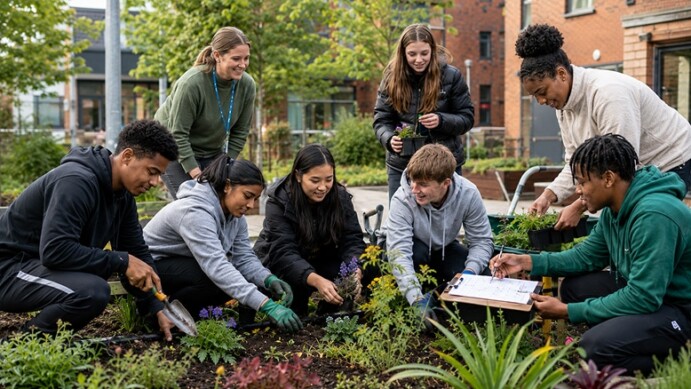
The model connects with several areas of OT’s work. While academic attainment remains crucial, it also raises questions about how schools can create more space for young people to develop life skills through projects, practical experiences and student-led activity.
For enrichment, it highlights how broader opportunities might be built into the structure of the school day, rather than relying mainly on optional after-school access, family resources or additional staffing. More broadly, Alpha’s emphasis on life skills, projects and student interests aligns with OT’s futures and youth social action work. It prompts consideration of how young people can learn through doing: developing confidence, working with others, solving problems and shaping meaningful activity for themselves.
What still needs to be tested
There is an important distinction between what Alpha School publicly claims, what external reporting describes, and what Ormiston Trust has verified.
A first question is whether Alpha appears to work in its own context. Public claims and external reporting suggest strong academic progress in core subjects alongside high levels of student engagement, confidence and independence, although independent, peer-reviewed evidence remains limited. The next key question is then which elements — if any — could be adapted responsibly in mainstream UK settings.
What OT can take from this
We intend to look into this further to understand the evidence base , but the model is certainly of some interest to us and other leaders we know in the sector.